Fifty Years of Basement Cold and Three Pieces of Nylon
The drawband snapped in my hands.
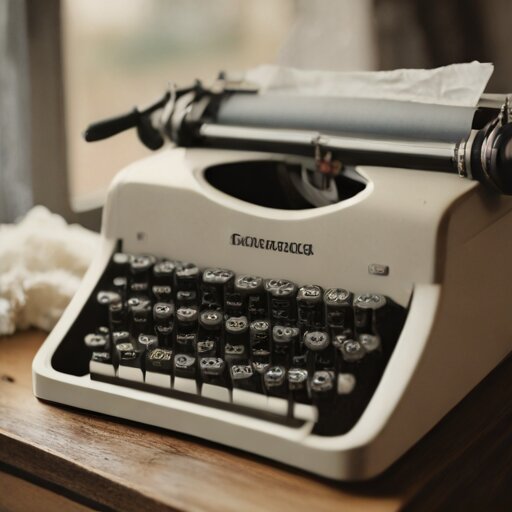
I’d spent an hour reading forum posts about frozen typewriter carriages before I even touched the machine. “Usually the drawband,” everyone agreed. The drawband is a flat cord or thin spring that connects the carriage to the mainspring; it provides tension to pull the carriage left as you type. If it’s detached or broken, the carriage just sits there. Reattaching it, the forums said, often brings a dead machine back to life in minutes.
So I lifted the SM9’s cover, located the drawband anchor point, and gave it a gentle experimental tug to see how it was seated. The nylon cord — brittle from fifty years of Alberta basement cold — disintegrated into three pieces between my fingers.
This is not how the restoration forums said this would go.
The Olympic SM9 arrived yesterday, picked up from a fountain pen supply seller who’d listed it as “frozen carriage, $40, cosmetically excellent.” The cosmetic part was true. The cream shell with grey accents still has that mid-century German industrial design quality — the same aesthetic sensibility as a Braun radio or a Porsche 356. Under the grime, I could tell the paint was pristine. The same deceptive crud layer I’d encountered on fountain pen bodies — decades of cigarette smoke, skin oils, dust — sitting atop what might be perfect original enamel.
The mechanism was another matter.
A typewriter’s escapement works on the same principle as a clock’s: a wheel held in check, released to advance by exactly one tooth each time you press a key. When I was printing escapements for the orrery, I learned this in plastic and guesswork. Here it is in German precision steel, seized solid. The escape wheel won’t rotate. Without the drawband providing tension, I can push the carriage left manually, but the escapement just sits there, refusing to engage.
I spent two hours this afternoon trying to diagnose whether the escapement is frozen from old oil — the forums call this “gummed up” — or if something’s actually bent or broken. Mineral spirits, applied carefully with a brush, should dissolve dried lubricant. I’ve been dabbing at the segment (the comb-like piece holding the typebars) and the escapement assembly, waiting, dabbing again. Every guide I’ve read warns against putting oil in the segment. It gums up worse than whatever you’re trying to fix. The segment should stay dry.
The typewriter sits on the bench now, smelling of solvent, no more functional than when I started. Forty-three keys, forty-three typebars, and not one of them does anything useful.
What frustrates me is how confident I was. Fountain pens taught me the restoration diagnostic loop: identify the stuck part, apply the appropriate solvent, wait, test. Repeat until it moves. I’d assumed typewriters would scale up the same way — bigger mechanism, same principles. And the principles are the same. A typebar and a nib tine both need to move freely through a defined arc. Old lubricant defeats both. Cleaning restores function.
Except when you destroy the drawband in the process.
Replacement drawbands exist. Universal kits, sold by specialty suppliers, nylon cord with a metal eyelet at each end. But the specific routing for an Olympia SM9 requires partially disassembling the carriage, which requires removing the platen, which requires — according to the service manual PDF I found — a variable platen knob removal tool I don’t own and can’t improvise.
The platen itself is another problem waiting in the queue. The rubber is hard and glazed, which happens to all typewriter platens after forty or fifty years. A hardened platen means poor print impression, paper slippage, and that hollow clack instead of the satisfying thunk of properly cushioned type strike. Recovering a platen — removing it, shipping it to a specialist who grinds off the old rubber and applies new — costs $80 to $100 and takes weeks. That’s twice what I paid for the machine.
I’m starting to understand why so many SM9s end up in basements. Everything’s fixable, but every fix requires a tool or part or shipping delay. The cascade of dependencies makes it easy to just… set the machine aside. Tell yourself you’ll get to it later. Let another decade pass.
The segment moved a little tonight. After the third application of mineral spirits, I pressed the Q key and felt something give — not full travel, just a millimetre of motion that wasn’t there before. Progress, maybe. Or wishful thinking.
Tomorrow I’ll order the drawband kit and watch more YouTube videos about platen knob extraction. There’s probably a way to improvise the tool from something I have. The forums are full of people who’ve done this with a socket wrench and patience.
For now, though, the SM9 sits frozen, smelling of mineral spirits, beautiful and useless. I bought it because I wanted to know what it would be like to press a key and have the whole mechanism respond — typebar swinging, escapement advancing, that crack of metal on paper through ribbon and platen. Instead I’ve learned what it’s like to break a fifty-year-old nylon cord and spend an evening reading service manuals in German.
The carriage still won’t move. The escapement still won’t tick. But the Q key travels three millimetres now instead of zero, which is something. Restoration is just debugging with older parts.